Toddler Hitting or Biting: 60-Second Calm Response Plan

Toddler Hits or Bites? A Calm, Quick-Action Plan for the Moment and Beyond
Hitting and biting can feel shocking and urgent—especially when it happens fast at the playground, at daycare pickup, or between siblings at home. A simple, repeatable response helps keep everyone safe, reduces shame, and teaches skills toddlers can actually use next time. The goal isn’t a perfect reaction; it’s a steady plan you can repeat even when you’re rattled.
First priority: safety and a steady adult nervous system
In the first few seconds, a toddler’s brain is in “impulse mode.” Long explanations won’t land yet, and intense reactions can accidentally add fuel. Start with safety and simple language.
- Move in close, block the hit or gently separate bodies; place a hand between children if needed.
- Use a calm, firm voice—short phrases land best when a toddler is dysregulated.
- Check the injured child first (comfort, clean, ice pack); keep language neutral and brief.
- Avoid long lectures, threats, or asking for explanations in the heat of the moment.
- If biting is frequent, consider practical safety steps: supervise closely during peak times, keep nails short, and reduce tight crowding during play.
If you feel your own adrenaline spike, try one grounding move while you step in: plant your feet, drop your shoulders, and exhale slowly before you speak. A regulated adult is the fastest path to a regulated child.
The 60-second response: a quick-action checklist
This sequence works in public, at home, and in childcare settings because it’s predictable. You’re teaching two messages: “I will keep everyone safe” and “I will show you what to do instead.”
- Stop: “I won’t let you hit/bite.”
- Separate: create space without yanking or shaming; move the toddler to your side or behind you.
- Name the feeling: “You’re mad/frustrated/excited.” (One guess is enough.)
- Set the limit: “Teeth are for food. Hands are for gentle.”
- Offer a safe alternative: “You can stomp, squeeze this pillow, or ask for a turn.”
- Repair later: once calm returns, practice what to do next time (one short redo).
Quick scripts to use in the moment
| Situation | What to say | What to do |
|---|---|---|
| Hitting during play | “I won’t let you hit. Gentle hands.” | Block, separate, redirect to a safe action (stomp, hands on knees). |
| Biting when frustrated | “No biting. Teeth are for food.” | Move child away, offer a teether/chewy or a crunchy snack if appropriate. |
| Aggression over toys | “You want it. You can ask: ‘Turn please.’” | Help with a turn-taking plan: timer, two similar toys, or trade-and-return. |
| Sibling conflict | “I’m here to keep everyone safe.” | Separate, attend to injured child, then coach the other child through a redo. |
What’s driving the behavior: common toddler reasons (and what helps)
Most toddler aggression isn’t “bad behavior.” It’s a skills gap under pressure. When you match the support to the reason, the behavior usually fades faster.
- Big feelings + small skills: Toddlers act before they can find words. Teach one replacement phrase at a time (“Help,” “Mine,” “Stop”). Practice during calm moments.
- Sensory needs: Biting can be sensory-seeking. Offer safe oral input (chewy necklace/teether), crunchy foods, or “blowing” games (bubbles, pinwheels).
- Overstimulation and fatigue: Aggression spikes with hunger, tiredness, crowded spaces, and long transitions. Adjust routines before expecting better control.
- Communication delays: If speech is limited, use gestures, picture cues, or simple sign language to reduce frustration.
- Boundary testing: Consistent limits matter. The goal is predictable safety, not punishment.
For additional age-based guidance on toddler behavior and discipline, see resources from American Academy of Pediatrics (HealthyChildren.org) and the CDC Essentials for Parenting.
After everyone is calm: teach, practice, and repair
Once your toddler’s body is calmer, that’s when learning can happen. Keep it short and practical.
Prevention that actually works: set the environment up for success
Simple prevention often starts with food and timing. Packing predictable snacks can reduce “hangry” spikes—an insulated option like the Double Layer Insulated Lunch Bag makes it easier to keep go-to items ready for daycare runs, park trips, and long errands.
When to get extra support
For more developmental and relationship-based toddler support, Zero to Three offers practical resources on what’s typical and what strategies help.
A ready-to-use checklist for real-life moments
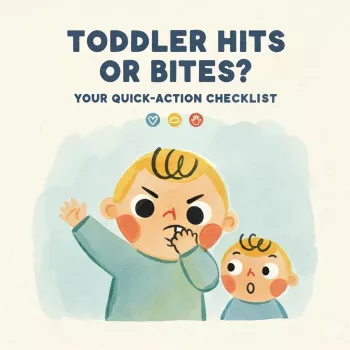
- If you want a simple script you can hand to caregivers, use Toddler Hits or Bites? Your Quick-Action Checklist (eBook download) for a repeatable “stop, separate, teach, repair” plan.
- Consistency is easier when your stress is supported too; Calm in the Chaos: A Parent’s Guide to Managing Stress (eBook download) focuses on staying steady through the toughest parenting weeks.
FAQ
Should a toddler be punished for hitting or biting?
Immediate safety and consistent limits work better than punishment in the moment, because a dysregulated toddler can’t learn well while escalated. Use a logical consequence (end the play, move away), then teach a replacement skill and practice a short redo once calm.
What if my toddler laughs after hurting someone?
Laughing can be a nervous-system release, overwhelm, or a quick attempt to get connection—not proof a child is “mean.” Keep your response neutral: separate, help the injured child, then coach the safe alternative without adding extra attention to the laughter.
How can daycare and home handle biting consistently?
Agree on the same short scripts and the same steps (stop, separate, comfort, teach), and track triggers like time of day, transitions, or crowding. A one-page checklist posted for caregivers helps everyone respond the same way, which typically reduces biting faster.







Leave a comment