Baby’s First Foods Plan: Safe Starts, BLW & Allergens
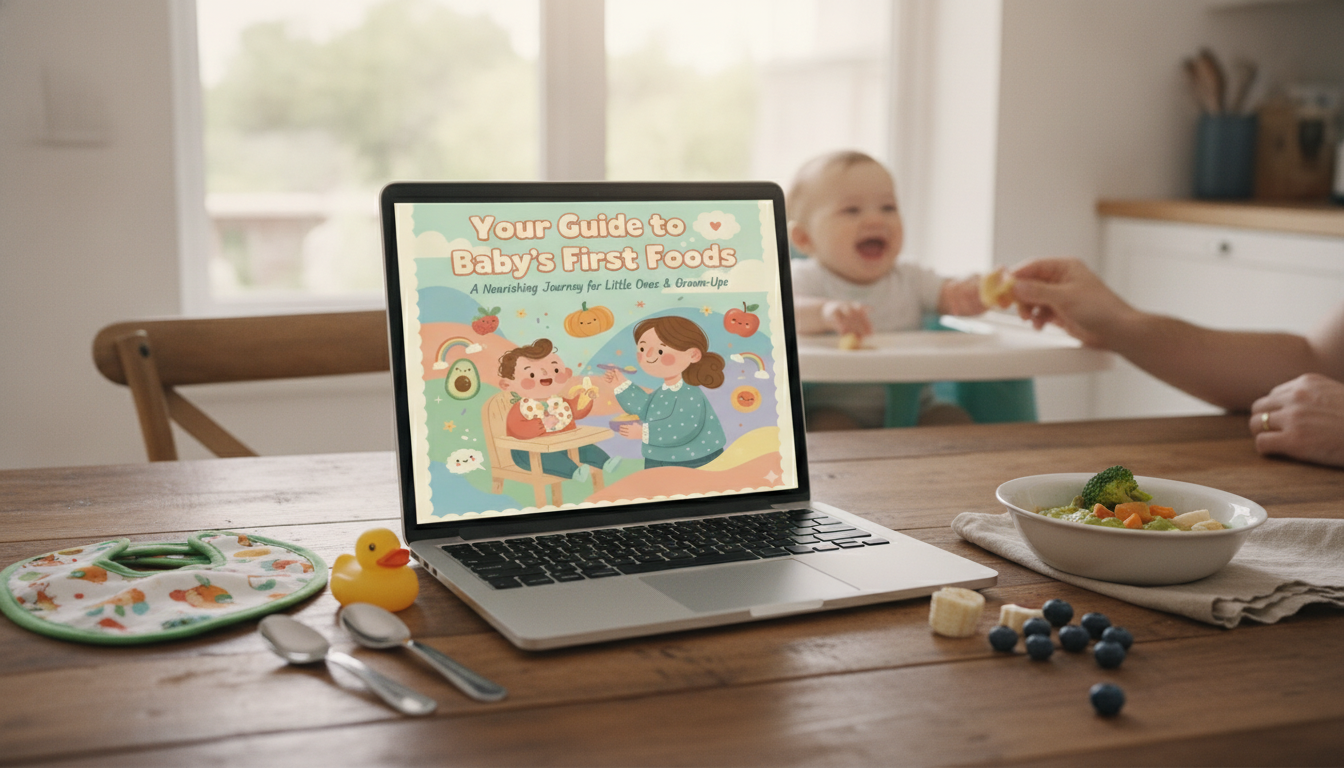
Your Guide to Baby’s First Foods: A Printable Plan for Confident First Bites
Starting solids can feel like a big leap—textures, allergens, choking concerns, and figuring out what to serve first. This guide breaks the process into simple steps: when to start, which foods to prioritize, how to prep safe shapes for self-feeding, and how to build balanced meals over the first weeks. For families who want a ready-to-use reference and checklist, Your Guide to Baby’s First Foods | Printable eBook keeps daily decisions simple—especially when multiple caregivers are involved. For more guidance, see [PDF] Healthy Pregnancy – Cleveland Clinic.
When a Baby Is Ready for Solid Foods
Most babies start solids around 6 months, but readiness matters more than the calendar. Check with your child’s pediatrician—especially for preterm infants or babies with medical conditions—and watch for these common signs: For further reading, see Eating well in the first year – First Steps Nutrition Trust.
- Sits with support and stays relatively steady
- Good head and neck control
- Brings objects to mouth and can move food around
- Shows interest when others eat
- Reduced tongue-thrust reflex (less automatic pushing food out)
Early on, breast milk or formula remains the primary nutrition source; solids are mostly practice and exposure. Expect mess, tiny amounts, and repeated tries—those are all normal steps toward confident eating. For a helpful overview of timing and first textures, see the CDC guidance on introducing solid foods and American Academy of Pediatrics tips on starting solids.
First Foods That Build Nutrition Early
When choosing first foods, prioritize nutrients that are harder to get from milk alone as baby grows—especially iron and zinc. Great early options include soft meats, fish, egg, beans/lentils, and (if you use them) iron-fortified cereals. You can also include nut/seed butters in safe forms (thinned or mixed into other foods).
To keep meals satisfying and support growth, add energy-rich foods like avocado, plain full-fat yogurt, and a drizzle of olive oil stirred into purées or mash (as appropriate for your baby’s stage). Fruits and vegetables are excellent for flavor variety—start with soft-cooked textures so they’re easy to gum and swallow. Once solids begin, many clinicians recommend offering small sips of water with meals; follow your child’s guidance.
Starter Foods: Nutrients, Prep Ideas, and Texture Tips
| Food | Key nutrients | Easy prep | Baby-led texture idea |
|---|---|---|---|
| Avocado | Healthy fats, calories | Mash with a fork; add breast milk/formula if needed | Thick wedge with peel partially left on for grip |
| Egg | Iron, protein, choline | Scramble until soft; or hard-boil and mash with yogurt | Omelet strip cooked well and cut into finger-length pieces |
| Lentils | Iron, fiber, protein | Cook until very soft; mash slightly | Thick lentil patty or spoon-fed lentil mash |
| Salmon | Omega-3 fats, vitamin D, protein | Bake/steam; flake finely and moisten | Soft flakes pressed into a thick stick shape |
| Sweet potato | Carbs, beta-carotene | Roast/steam until very soft; mash | Large soft wedge (well-cooked, easy to mash with gums) |
| Plain yogurt (full-fat) | Calcium, protein, fat | Serve plain; mix with fruit purée | Pre-loaded spoon for baby to bring to mouth |
Baby-Led Weaning Basics (and Safe Finger-Food Shapes)
Baby-led weaning can work well when baby is ready and foods are prepared safely. A simple rule: aim for “soft enough to squish.” Foods should mash easily between your fingers and your baby’s gums.
- Start with large pieces (about adult finger length) that are easy to grasp.
- Avoid hard, round, or crumbly items early on (they can break into risky shapes).
- Supervise closely: baby sits upright, meals stay calm, and there’s no eating in car seats or while distracted.
- Learn the difference between gagging (common and protective) and choking (a breathing emergency). An infant CPR class can boost confidence.
If you’re juggling daycare drop-offs and busy afternoons, planning ahead helps—especially once baby starts eating away from home. A simple cooler setup like the Double Layer Insulated Lunch Bag can make it easier to pack yogurt, soft fruit, or leftovers in baby-safe portions.
Allergens, One at a Time, Without Overcomplicating It
A Simple First-Week Plan (Flexible, Not Perfect)
If the mental load feels heavy, a structured reference can help you stay consistent without overthinking each meal. Your Guide to Baby’s First Foods | Printable eBook is designed for quick look-ups, checklists, and easy “what to serve next” ideas.
Choking Hazards and Common Mistakes to Avoid
Printable Support: What the eBook Helps With Day to Day
Families often know the basics but get stuck on the day-to-day “What now?” The printable eBook is useful for:
And because starting solids can be stressful even when things are going “normally,” support for the parent matters too. Calm in the Chaos: A Parent’s Guide to Managing Stress (eBook) offers practical tools for staying grounded during the trial-and-error stage.
FAQ
What are the best first foods for a baby starting solids?
Iron-rich foods are a smart starting point, such as soft meats, egg, beans/lentils, and iron-fortified options if you use them. Add easy soft foods like avocado, sweet potato, and plain full-fat yogurt, and focus on baby-safe textures with repeated exposure over time.
Is baby-led weaning safe for first foods?
It can be safe when baby shows readiness, sits upright, and foods are prepared in soft, large, graspable shapes. Constant supervision and avoiding common choking hazards are essential, and CPR knowledge can improve confidence.
How do allergen introductions work when starting solids?
Introduce common allergens one at a time when baby is healthy, earlier in the day, starting with small amounts. If tolerated, repeat regularly as advised by your clinician, and seek individualized guidance for eczema or a strong allergy history.







Leave a comment