Child Resists Rules? Calm Gentle Checklist + Next Steps
When Your Child Resists Rules: A Calm, Gentle Checklist for the Moment (and What to Do Next)
Rule-resistance is often less about “defiance” and more about a child’s skills, needs, or nervous system state colliding with the demand. In real life, that can look like stalling, arguing, melting down, or doing the opposite of what you asked—right when you’re already tired. A simple, repeatable checklist helps you respond the same way (even when you don’t feel calm): regulate first, connect briefly, restate the limit, and follow through without adding heat. Over time, a steady boundary protects safety and builds cooperation—while helping you stay confident and consistent on the hard days.
Start with the quick reset: pause, breathe, and check the basics
The first few seconds are where many power struggles begin. A short reset keeps your response anchored and helps your child borrow your calm.
- Pause for one slow breath before speaking; those first 5 seconds often determine whether the moment escalates.
- Check immediate safety: block hitting/throwing, move breakables, or create space before negotiating anything.
- Ask the basics: hungry, tired, overstimulated, needing movement, needing connection, needing control/choice.
- Name the moment in one sentence: “This is hard. I’m here. The rule still stands.”
- Use a neutral voice and minimal words; long explanations can feel like pressure when a child is dysregulated.
If your child is very young or highly activated, you may need to “do less, say less.” Quiet presence plus gentle, confident action often works better than a perfectly worded speech.
The 3-step gentle boundary: connect, state the rule, follow through
Gentle parenting doesn’t mean endless negotiation. It means clear limits delivered with empathy and consistency.
Step 1: Connect first (without giving in)
Start with brief empathy: “You really want more screen time.” This lowers threat and helps your child feel seen—without changing the limit.
Step 2: State the rule clearly and simply
Keep it short and positive when possible: “Screens are done. It’s bath time.” If the rule exists for safety, say that plainly.
Step 3: Follow through calmly
Offer a tiny choice inside the boundary (“Blue towel or green towel?”). If the answer is still “no,” follow through without threats: guide, remove the item, or end the activity. Consistency teaches faster than new arguments each time.
| Situation | What the child might need | Calm parent response | Follow-through |
|---|---|---|---|
| Refuses to transition (play to dinner) | More warning + sense of control | “Two-minute timer. Then dinner. Do you want to carry the toy or park it?” | Start timer; guide to dinner; toy rests if used to stall |
| Says “No!” to a routine (bath/bed) | Connection + predictable steps | “You don’t want to stop. First pajamas, then story. Want to pick the book?” | Begin routine; reduce choices if delaying continues |
| Breaks a rule repeatedly (jumping on sofa) | Movement need + clear boundary | “Couch is for sitting. You can jump on the mat.” | Move child to safe jumping spot; remove access if needed |
| Argues about fairness (“But siblings…”) | Clarity + validation | “You wish it were the same. This is your rule today.” | End debate; restate and proceed |
| Meltdown after limit | Co-regulation + time | “You’re safe. I’ll stay close.” (quiet presence) | Hold boundary; offer water/quiet space; discuss later |
Language that lowers resistance (and what to avoid)
Small wording changes can reduce bargaining and help you sound confident even when you’re not feeling it yet.
Helpful resource roundups on age-appropriate discipline and communication can also support your wording and expectations, including the American Academy of Pediatrics Positive Parenting Tips and the CDC Essentials for Parenting.
Repair and teach later: the calm debrief that builds cooperation
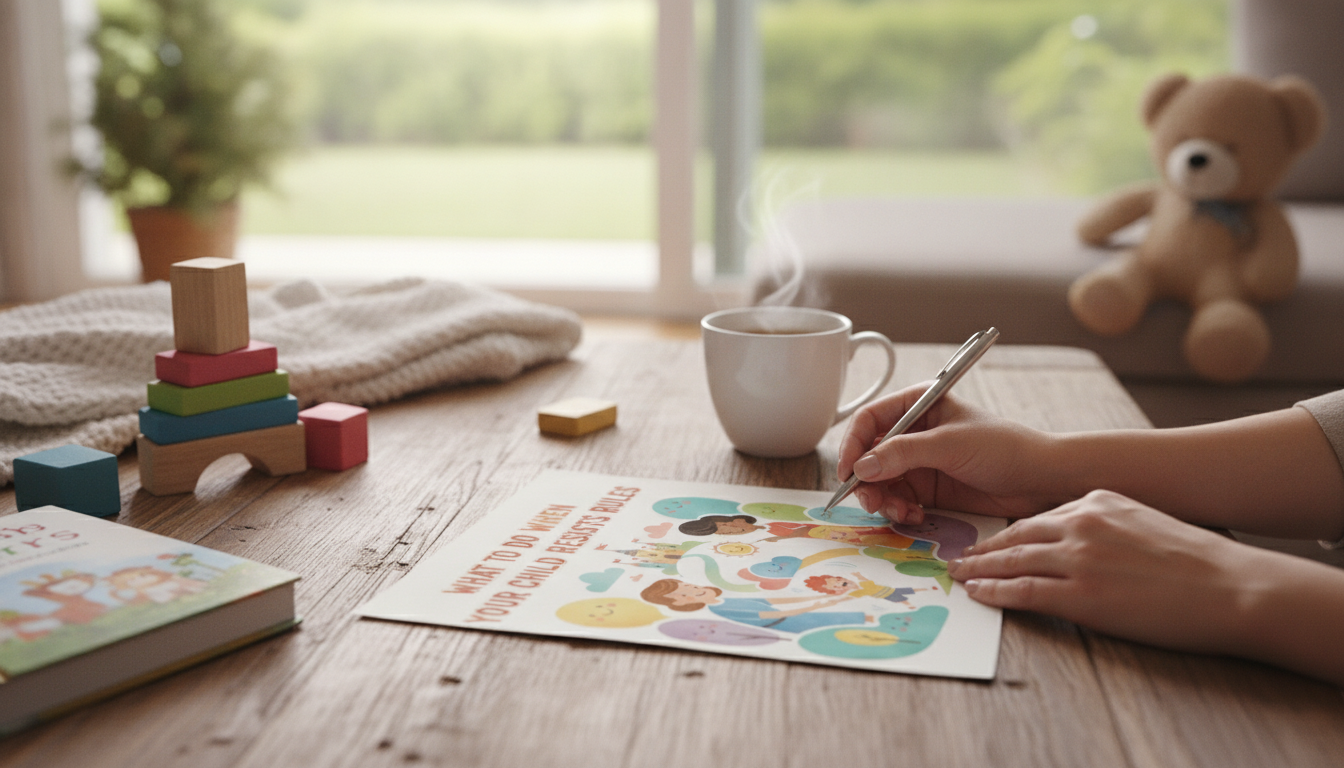
If you want a simple way to stay consistent across caregivers, a ready-to-print tool can help: Checklist: What to Do When Your Child Resists Rules (Printable Gentle Parenting Guide). It’s designed for “in the moment” prompts and “after the moment” reflection, so you’re not reinventing your response every time.
Common patterns behind “rule breaking” (and what helps most)
One practical bonus: when parents have a plan for their own stress response, follow-through gets much easier. Calm in the Chaos: A Parent’s Guide to Managing Stress (Digital Download) supports the “parent regulation” piece—so your tone and actions stay steady even when your child is loud and persistent.
A printable checklist that stays steady when emotions run high
For families building calm boundaries with positive discipline tools, this printable checklist can make follow-through feel clearer, calmer, and more repeatable—especially during transitions like leaving the park, starting bedtime, or ending screens.
FAQ
What should be done when a child refuses to follow rules?
Prioritize safety first, then offer brief empathy, restate the rule clearly, and give a small choice within the boundary. If your child still refuses, follow through calmly and save the longer teaching for later when everyone is regulated.
How can consequences be used without punishments in gentle parenting?
Use natural or logical consequences that are respectful, related to the behavior, and predictable (for example, removing access to an item that’s being misused). Keep your tone neutral and avoid shaming so the consequence teaches rather than intimidates.
How can calm be maintained when a child keeps saying “no”?
Use a short script, fewer words, and a steady “when/then” statement, repeating it without escalating. If it’s safe, take one grounding breath, lower your voice, and focus on consistent follow-through instead of winning an argument.











Leave a comment